Memory
Why we have so many pictures of the dead and so few of their voices
Photographs of previous generations are common and recordings of them speaking are rare. The imbalance has a technical cause and a lasting effect.
This works through recorded voices in the order the parts actually depend on each other.
The short version
- Photography became cheap and domestic decades before recording did.
- Recorded voice conveys personality more directly than a still image.
- Recording a conversation now is trivial and almost nobody does it deliberately.
The technologies arrived on different schedules
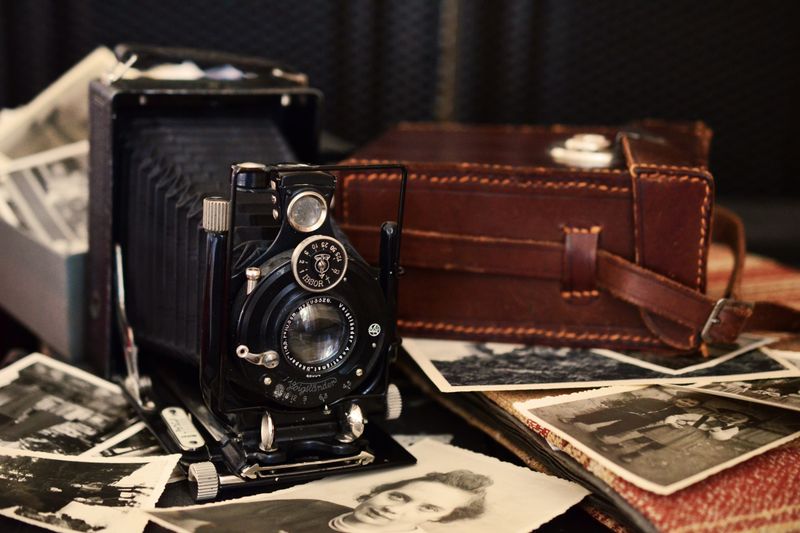
Affordable domestic photography reached ordinary households long before affordable domestic sound recording did. That gap means most families hold images of several generations and recordings of at most one or two. Where early recordings exist, they were usually made for a specific occasion rather than as a routine part of family life.
Home movie film generally captured no sound at all, which is why so much surviving family footage is silent. The result is a visual record that reaches back much further than the audible one, for entirely mechanical reasons.
Voice carries something images do not
Speech conveys accent, pace, humour, hesitation and the specific way a person constructed a sentence. People who have heard a recording of a relative they lost consistently describe it as more affecting than any photograph. That reaction appears to be about recognition, since voice is processed differently and is strongly tied to personal familiarity.
Accent and vocabulary also carry historical information about place, class and migration that a photograph cannot show. Linguists value ordinary recorded speech for exactly that reason and are consistently short of everyday examples.
The recordings that exist are the wrong ones
Where family audio survives, it is often a formal occasion, a speech or a message rather than ordinary conversation. Formal speech is the least characteristic thing anybody produces, because it is performed and consciously controlled. Answering machine messages became unexpectedly valued for the opposite reason, since they were unrehearsed and brief.
What is easy to forget is that the general pattern is that the most useful recordings are the ones nobody thought were worth making. That is the same rule that applies to diaries, photographs and letters, and it holds with unusual consistency.
Recording is now trivial and still rare
Every phone can record hours of audio, and the storage cost is effectively nothing for anything of family length. Almost nobody does it, because the act feels formal and slightly morbid when the reason for doing it is stated.
Oral history projects work around this with structured interviews, which produce excellent material and require organisation. A simpler approach is to record an ordinary conversation with permission and without a script, which most people find easier.
Consent matters both practically and legally, and rules on recording conversations differ significantly between countries.
Preserving audio has its own difficulties
Magnetic tape degrades, and some formulations suffer well-known deterioration that requires specialist treatment before playback. Playback equipment for older domestic formats is increasingly scarce, which is often the binding constraint rather than the tape itself.
By the end, digitising while machines and expertise still exist is the standard advice from archives, and the window narrows every year. Once digitised, audio faces the same format and account risks as everything else and needs the same handling. Storing an uncompressed copy alongside any convenient version is the usual recommendation for anything irreplaceable.
What to actually do
Ask an older relative to talk about something specific and ordinary, such as a job, a journey or a house they lived in. Specific prompts produce far better material than general requests to talk about their life, which tend to produce summaries. Record the date, the names and the place at the start of the file, since that context is the first thing lost.
Look closer and half an hour is enough to preserve how somebody sounded, which is the part that cannot be reconstructed from anything else. Nobody regrets having done this, and a great many people describe not having done it as a permanent and specific loss.
The takeaway
We inherit faces easily and voices almost never, and the voice is the part nobody can imagine correctly.
What replaced it works. That is not the same as it being nothing.
Questions readers ask
Why is there so little recorded audio of earlier generations?
Domestic photography became cheap decades before domestic sound recording did, and most home movie film carried no sound. The imbalance is mechanical rather than a matter of what people valued.
What is the best way to record an older relative?
Ask about something specific and ordinary rather than their life in general, get permission, and state the date, names and place at the start of the recording. Half an hour of unscripted conversation is worth a great deal.