Memory
Remembering a building that is not there to check against
Memories of demolished places drift because nothing corrects them. The reconstruction that results is confident, detailed and frequently wrong.

Comparisons of remembering demolished places usually pick a winner. This one picks the circumstances, which is more useful.
The difference in one place
- Memory is reconstructive, and without the original it cannot be corrected.
- Group agreement about a vanished place strengthens confidence, not accuracy.
- Photographs and plans usually exist and are rarely consulted before the memory hardens.
Memory needs something to check itself against
Recalling a place is a reconstruction assembled from fragments rather than the retrieval of a stored image. Each recall slightly alters what is stored, so a memory revisited often is a memory that has been repeatedly rewritten. Returning to a place corrects the drift, because the building supplies details the reconstruction had quietly invented.
When the building has gone, no correction is available and the drift continues without any resistance at all. That is why memories of demolished places tend to be unusually vivid and unusually inaccurate at the same time.
Groups agree their way into confidence
People who shared a place discuss it, and discussion converges on a common version through ordinary social influence. Confidence rises with agreement, while accuracy does not, and the two are only weakly related in memory research. Details introduced by one person are frequently absorbed by others and later recalled as first-hand experience.
This has been demonstrated repeatedly in studies of eyewitness memory, and the effect is robust rather than marginal. A room full of people certain about a vanished building is exactly the condition under which errors become permanent.
The specific things that go first
Scale is unreliable, and remembered rooms are typically larger than the plans show, particularly rooms known in childhood. Colour, layout and the position of entrances drift readily, since they are the details least often rehearsed.
Sequence goes too, so events from different years compress into a single remembered visit. What survives best is usually sensory and emotional rather than architectural, which is why smell recollections are so persistent. A description of a vanished place is generally more reliable about how it felt than about how it was arranged.
The evidence usually exists
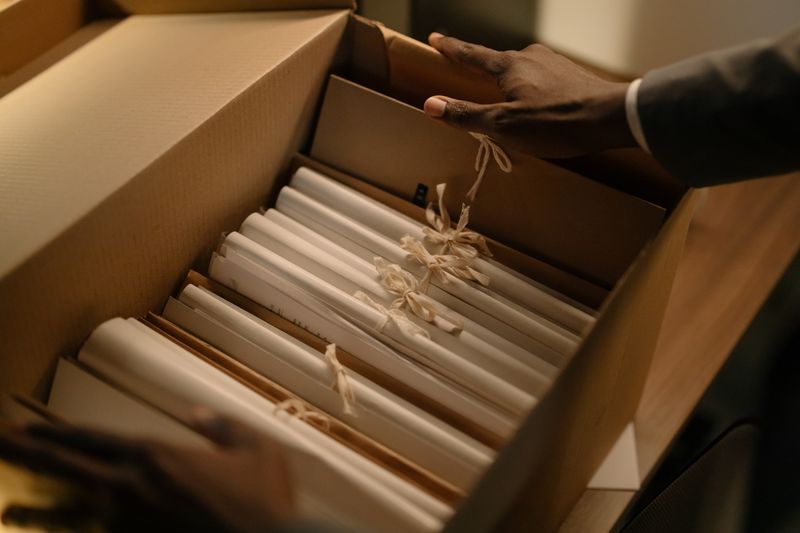
Planning applications, insurance plans, valuation records, survey drawings and photographic surveys are held in local archives for many buildings. Newspaper coverage of an opening, a closure or a demolition frequently includes descriptions and images.
Aerial photography and street-level survey imagery from various periods cover a great deal of the built environment. Access arrangements and coverage vary enormously by country, and much of it requires visiting an archive in person.
The material is generally more available than people assume and far less consulted than it should be.
Reconstruction is not worthless
A remembered building is genuine evidence about how a place was used, which plans and photographs rarely record. Where people entered, which routes they took, which corners were avoided and what a room was actually for are all social facts.
Oral testimony is the standard method for recovering that, and it is treated as a different kind of source rather than a lesser one. The correct approach is to gather the recollection and the documentary evidence and treat disagreements as informative. Where they conflict, the conflict itself usually points at something worth understanding.
Why demolition feels disproportionate
Losing a building removes the anchor for every memory attached to it, which is why people describe the loss as larger than the structure. Familiar routes and orientation are also disrupted, and people report genuine difficulty navigating areas they knew well. Photographing a place before it goes, from the angles people actually used rather than from the street, is a practical response.
In truth, recording what happened in each room, with names and approximate periods, preserves the part that documents will not carry. Buildings are demolished continuously and quietly, and the record is almost always assembled afterwards by somebody wishing it had been done first.
Side by side
| Consideration | What it means in practice |
|---|---|
| Memory needs something to check itself against | Memory is reconstructive, and without the original it cannot be corrected. |
| Groups agree their way into confidence | Group agreement about a vanished place strengthens confidence, not accuracy. |
| The specific things that go first | Photographs and plans usually exist and are rarely consulted before the memory hardens. |
The takeaway
The building was the only thing keeping the memory honest. Once it went, there was nothing left to argue with.
Nobody decided to stop. It simply stopped being worth the effort.
Questions readers ask
Why do remembered rooms seem bigger than they were?
Partly because many were first known in childhood, when the observer was smaller, and partly because memory is reconstructive and scale is one of the details least often rehearsed and most easily distorted.
Is it worth recording memories of a demolished building?
Yes, but alongside documentary evidence rather than instead of it. Recollection is reliable about how a place was used and unreliable about how it was arranged. Where the two disagree, the disagreement is usually informative.