Work
The tea trolley and the break that was brought to you
Somebody used to arrive at your desk at a fixed hour with something hot. The rest of the office stopped because the trolley did.
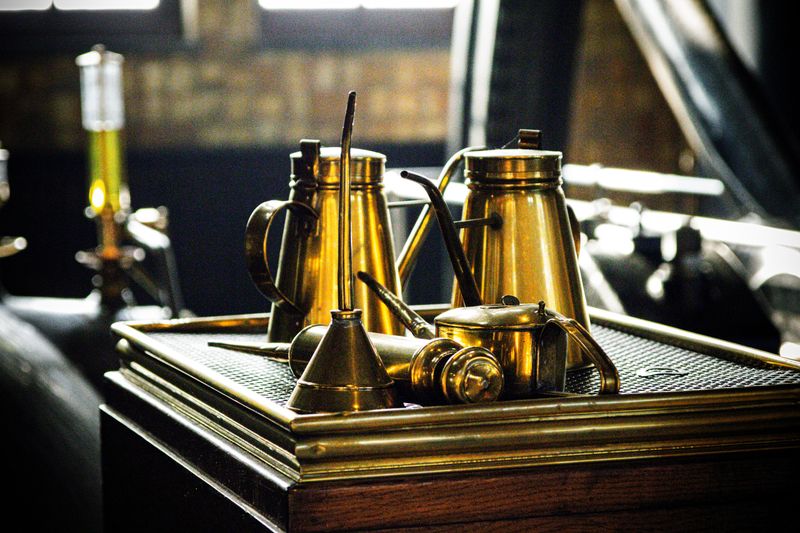
The options around the workplace tea trolley are set out side by side below, with the conditions that genuinely favour one over the other.
The difference in one place
- The trolley synchronised breaks across a whole floor without any instruction.
- The role was low paid, visible and gave one person access to every department.
- Self-service kitchens made breaks individual and easy to skip entirely.
A moving break imposed a shared clock
A trolley arriving on a floor at a fixed hour stopped everybody at once, because the opportunity was present and then gone. That synchronisation is the important part, since a break taken by everybody simultaneously produces conversation that staggered breaks do not.
It also created a natural boundary in the morning and the afternoon, dividing a shift into portions with a marker between them. Nobody had to decide whether they deserved a break, which removes a surprising amount of friction from taking one. Where breaks became self-service, the decision returned to the individual, and individuals under pressure consistently decide against.
The person pushing it saw everything
Serving every desk on every floor meant knowing the whole organisation by face, including people who never met each other. That produced an informal information network, and the trolley operator frequently knew about changes before they were announced.
Look closer and the role was poorly paid, largely done by women, and treated as unskilled despite requiring speed, memory and considerable diplomacy. It also carried a real welfare function, because somebody visiting every desk daily notices when a person stops appearing. Jobs that involve visiting everybody are consistently undervalued and consistently the first ones removed on cost grounds.
Workplace catering was once a genuine obligation
Larger employers ran canteens, subsidised meals and provided drinks, partly under regulation and partly to keep staff on site. Requirements for rest facilities, drinking water and eating areas exist in workplace law in many countries, though the detail varies considerably. Subsidised catering was also a form of pay that was efficient for the employer and appreciated by staff.
For a while, as catering was outsourced and then removed, the cost moved to employees and to the businesses around the workplace. A canteen closing changes the local economy of a street as reliably as an office closing does.
What the replacement does differently
A kitchen with a kettle and a machine is available continuously, which is more flexible and better suited to varied working hours. It also allows people to make what they actually want, which the trolley with two options plainly did not.
Look closer and continuous availability removes the shared moment, so the kitchen fills at random and encounters become chance rather than routine. Coffee machines with queues partially restore the effect, which is why their placement is a genuine consideration in office design.
Deliberately designed collision points are an attempt to rebuild something that a trolley produced without any design at all.
Remote work removed the container entirely
Working from home makes every break individual, invisible and unmarked by any external signal. That suits people who prefer to manage their own rhythm and disadvantages people who rely on external structure to stop working. Scheduled informal calls are the common substitute, and they are widely reported as effortful in a way a trolley never was.
In truth, the difficulty is that the old version required no organisation, and organised informality tends not to feel informal. Whatever replaces it will need to be a by-product of something else rather than an activity in its own right.
How widespread this was is genuinely contested.
Where trolleys survive
Hospitals retain refreshment rounds, frequently run by volunteers, and they serve patients and visitors as much as staff. Trains kept an at-seat trolley service for longer than most settings, because passengers cannot leave and a moving service reaches everybody. Those survivals share the same feature: the customer is fixed in place and cannot go to the refreshments.
That is exactly the condition an office once had and no longer does, since staff are mobile and often absent. The trolley did not fail; the conditions that made it the obvious answer simply stopped applying.
Side by side
| Consideration | What it means in practice |
|---|---|
| A moving break imposed a shared clock | The trolley synchronised breaks across a whole floor without any instruction. |
| The person pushing it saw everything | The role was low paid, visible and gave one person access to every department. |
| Workplace catering was once a genuine obligation | Self-service kitchens made breaks individual and easy to skip entirely. |
The takeaway
Nobody had to decide to stop working. Somebody arrived with a trolley, and that settled it for the whole floor.
Nobody decided to stop. It simply stopped being worth the effort.
Questions readers ask
Why did workplace tea rounds disappear?
Cost and outsourcing removed the role, while flexible hours and hot-desking removed the fixed audience it depended on. A service that reaches everybody only works when everybody is at a known place at a known time.
Do employers have to provide facilities for breaks?
Workplace law in many countries requires drinking water and somewhere to rest or eat, but the detail differs substantially by jurisdiction. Subsidised catering has generally never been a requirement, only a common practice.