Places
Telephone exchange buildings and the machinery that left the room
Windowless brick buildings in every town once held racks of switching equipment. The equipment shrank, and the buildings are being sold.

There is a settled way of talking about telephone exchange buildings. It is worth asking how much of it survives contact with the detail.
The argument in brief
- Electromechanical switching required floors of machinery in every locality.
- Digital and then software switching shrank the footprint enormously.
- The buildings are being sold, converted or repurposed as data facilities.
The building existed because the switching was physical
Electromechanical exchanges used racks of relays and rotating selectors, one set of hardware for a given number of simultaneous calls. Capacity therefore consumed floor space directly, and a town's call volume determined the size of its exchange building. Those buildings were built solidly, often windowless, with heavy floors and substantial power and battery provision.
They are among the most anonymous and most numerous pieces of infrastructure in any developed country.
Digital switching emptied them
Electronic and then software-based switching handled vastly more traffic in a fraction of the space and with far less power. The same building that once held a floor of machinery might need a couple of racks, leaving most of it unused. Consolidation followed, since a single site could serve areas that previously needed several.
The estate became a property portfolio attached to a shrinking technical requirement.
They remain critical while looking abandoned
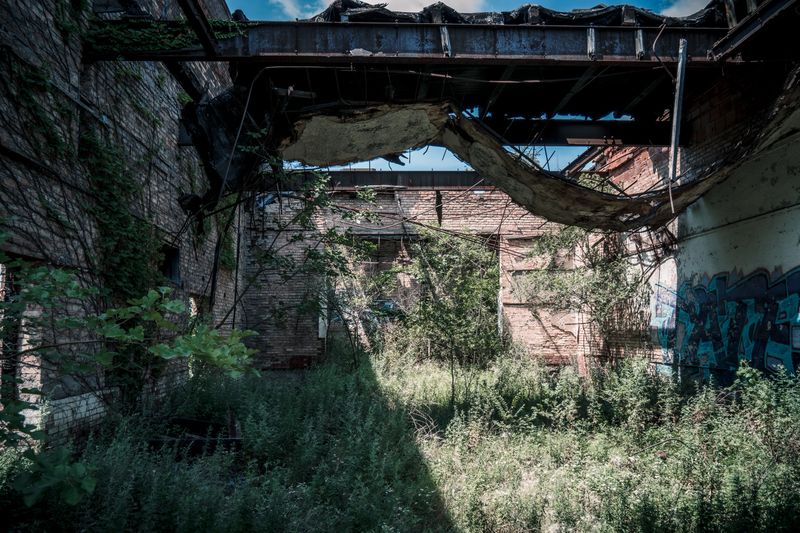
Many apparently disused exchanges still house the local termination point for copper and fibre serving surrounding streets. Emergency power, batteries and standby generators are typically maintained even where the building looks derelict. This is why a building with grass in the gutters can still be the reason a neighbourhood has a dial tone.
In truth, judging infrastructure by appearance is unreliable in exactly this way.
The copper is the constraint on selling them
Retiring an exchange requires migrating every line served from it, which means physically reworking connections to every affected premises. Copper retirement programmes in several countries are running years behind their original schedules for precisely this reason. Until migration is complete, the building cannot be released, whatever its property value.
The last few lines are always the expensive ones, and they are frequently the ones belonging to people with the least ability to change.
Their second life is often data
Exchanges have power, cooling capacity, security and fibre already present, which is most of what a small data facility requires. Some have been converted to edge data centres, and others to flats, offices or storage.
This is one of the neater cases of a building keeping its function class while completely changing its contents. The switching came back into the building; it just belongs to somebody else now.
Memory is a poor archive, and it is most of what survives.
The names survive in the numbering
Exchange names were once dialled as letters and are preserved in area codes, in street names and in the vocabulary of telephony. Directory listings, engineering records and enthusiast archives keep detailed histories that no official body maintains comprehensively.
That documentation is largely voluntary and is thinning as the people who worked in the buildings retire. The buildings will outlast the record of what they contained, which is the usual order of things.
The takeaway
The machinery that needed a building shrank to a cupboard, and the building is still standing there holding the last of the copper.
Nobody decided to stop. It simply stopped being worth the effort.
Questions readers ask
Are old telephone exchanges still in use?
Many are, at least partly, because they house termination equipment and power for local lines. Others have been sold and converted once every line served has been migrated.
Why does closing an exchange take so long?
Every line served has to be migrated to a new connection, which involves physical work at the premises. The final lines are the slowest and costliest, so programmes routinely overrun.