Work
The drawing office and the drafting skill that software absorbed
Every engineered object passed through a room of people producing precise drawings by hand. The room went, and so did a way of thinking on paper.
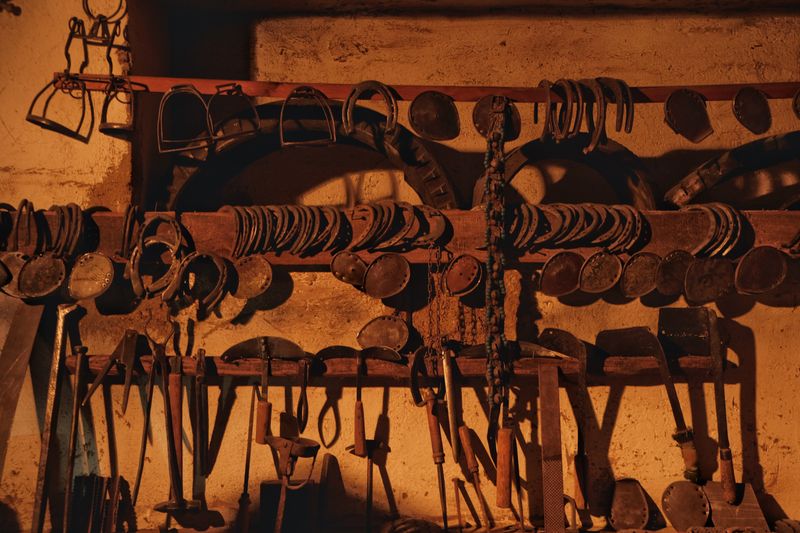
Everything here earned its place by changing an outcome. Nothing about the drawing office is included to round the number up.
What matters most
- Hand drafting required drawings to be planned completely before starting.
- Reproduction methods shaped what drawings looked like.
- CAD moved drawing to the designer and changed how errors are found.
A hand drawing had to be planned before it was begun
Ink on tracing paper was expensive to correct, so a draughtsman worked out the whole layout, scale and sheet composition in advance. That forced a complete mental model of the object before any line was drawn, which is a discipline the tool imposed rather than the person chose. Digital drafting allows work to begin anywhere and be rearranged endlessly, which is faster and removes the compulsory planning step.
Speed and reversibility usually arrive together, and they usually remove a forcing function nobody had named.
Reproduction dictated the aesthetics
Blueprints and later diazo prints reproduced line work by contact printing, which is why drawings used strong consistent line weights and stencilled lettering. Hatching, conventions and standardised symbols existed so drawings survived reproduction and were readable by anyone in the trade.
By the end, those conventions persist in CAD standards, now enforced by software rather than by the physics of the printing process. A visual language outlived the technical constraint that generated every one of its rules.
The office was a training structure
Junior draughtsmen worked on details and revisions under supervision, learning conventions and engineering judgement by producing drawings for people who checked them. That apprenticeship model transmitted a great deal of tacit knowledge about how things are actually made.
By the end, when drafting moved onto the designer's own screen, the intermediate role and its training pathway disappeared together. Losing a job also loses the ladder that ran through it.
Checking used to be a separate act
Drawings were formally checked and signed by someone other than the author, with the check recorded on the sheet itself. The physical drawing carried its own audit trail: who drew it, who checked it, what revision, what changed.
What is easy to forget is that digital revision control does this better in principle and depends on people using it consistently, which is a different failure mode. A signature block on paper is harder to skip than a field in a dialog box.
Modelling changed what a drawing is for
Three-dimensional modelling means the authoritative description of an object is the model, and drawings are extracted views of it. Clashes and interferences that once had to be spotted by an experienced eye are now found automatically, which is a large and genuine safety improvement. The trade-off is that errors inside the model propagate silently into every view derived from it.
Automated checking finds a different class of mistake from the class that a person reviewing a sheet finds.
The record here is thinner than it should be, and much of it was never written down.
The archives are a preservation problem
Hand drawings on linen and paper survive in company and museum archives and remain readable with no equipment at all. Drawings produced in early CAD formats are frequently unreadable now without emulation or specialist conversion. Engineering archives, shipyard records and infrastructure documentation are affected directly, and this matters when a structure needs assessing decades later.
The oldest drawings in many collections are the ones most likely to still open.
Everything above, in order of what to do first
- A hand drawing had to be planned before it was begun. Ink on tracing paper was expensive to correct, so a draughtsman worked out the whole layout, scale and sheet composition in advance.
- Reproduction dictated the aesthetics. Blueprints and later diazo prints reproduced line work by contact printing, which is why drawings used strong consistent line weights and stencilled lettering.
- The office was a training structure. Junior draughtsmen worked on details and revisions under supervision, learning conventions and engineering judgement by producing drawings for people who checked them.
- Checking used to be a separate act. Drawings were formally checked and signed by someone other than the author, with the check recorded on the sheet itself.
- Modelling changed what a drawing is for. Three-dimensional modelling means the authoritative description of an object is the model, and drawings are extracted views of it.
- The archives are a preservation problem. Hand drawings on linen and paper survive in company and museum archives and remain readable with no equipment at all.
The takeaway
The drawing was never only a record of the object. It was the process by which somebody was forced to understand it completely before starting.
Nobody decided to stop. It simply stopped being worth the effort.
Questions readers ask
Is hand drafting still taught?
Rarely as a professional skill, though sketching and drawing by hand remain part of many design and engineering courses as a thinking tool rather than a production method.
Why do old engineering drawings survive better than digital ones?
Paper and linen drawings need no equipment to read. Digital files depend on software and formats that become obsolete, and early CAD formats are frequently difficult to open today.