Rituals
Reading a newspaper you could actually finish
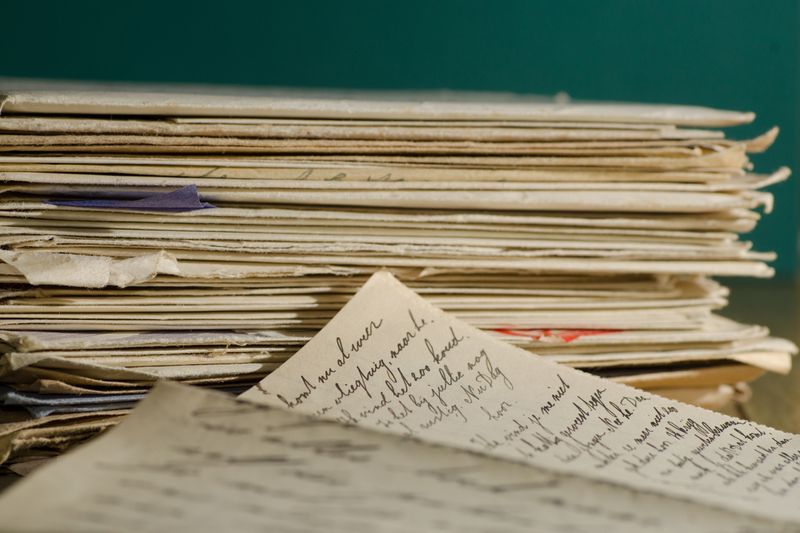
A bounded stack of paper contained everything you were going to read that day. The feed replaced the boundary with a supply that never runs out.

The options around the finishable newspaper are set out side by side below, with the conditions that genuinely favour one over the other.
The difference in one place
- A printed edition was finite, so completion was possible and felt like an ending.
- Editing decided proportion, which is information the reader never has to supply.
- Feeds are unbounded and personalised, which removes both the ending and the shared page.
Finiteness was the defining property
A newspaper contained a fixed number of pages, printed at a fixed hour, and nothing further would arrive until the following day. That made completion achievable, and finishing produced a genuine sense of having dealt with the day's information.
The reader could also see the whole thing at once, so the amount of attention required was known before starting. Nothing in a feed communicates that quantity, because there is no quantity and the supply is generated as the reader continues. The absence of an ending is the single largest structural difference, and almost every other difference follows from it.
Layout carried an argument about importance
Page position, headline size and column width told the reader what the editors considered significant before a word was read. That proportion is real information, produced by people who had seen all the available stories and made a comparative judgement. A ranked feed also expresses a judgement, but it is optimised for engagement rather than importance and is personalised per reader.
Consequently two readers of the same publication now see different material, which removes the shared reference the front page provided. Conversations that begin with an assumption about what the other person has seen become much harder to start.
Reading the parts you did not choose
Turning pages exposed readers to sport, obituaries, shipping notices, court reports and advertisements they would never have selected. That incidental exposure produced a rough general awareness of a place, including things nobody would search for deliberately.
Local newspapers in particular carried planning applications, council decisions and court outcomes that had no other public route. The decline of local titles has left genuine gaps in the reporting of local government, and researchers have documented the effect. Personalised delivery is better at giving people what they want and much worse at giving them what they had not considered.
The edition created a shared clock
Everybody received the same information at roughly the same time, which meant a day had a common informational starting point. Deadlines also imposed a delay, and that delay allowed checking, editing and occasionally the abandonment of a weak story. Continuous publishing removed the deadline and replaced verification-before-publication with correction-after, which is faster and structurally more error prone.
Live updating also makes the record unstable, since the version a reader saw may no longer exist in the same form.
Both changes are trade-offs rather than failures, and both were adopted because speed is commercially decisive.
What the replacement does differently
Digital news is faster, searchable, unlimited in length, capable of correction, and available in places no distribution network reached. It supports investigation that print could not fund at the same scale, and it reaches audiences a regional title never could. It also removed the classified advertising that funded local journalism, which is the single clearest cause of the local collapse.
Subscription and membership models have partially replaced that revenue and concentrate on national and specialist titles rather than local ones. The economics, not the technology, explain most of what happened to newspapers as institutions.
Rebuilding an ending
Daily edition applications, printed weeklies and email briefings all attempt to reimpose a boundary on an unbounded supply. They work for the same reason the original did, which is that a defined quantity can be completed and then put down.
People who adopt them typically report reading less and retaining more, though that is self-reported and hard to measure properly. The mechanism is not mysterious: a finite object permits a decision to stop that an infinite one structurally prevents. What was lost was never the paper; it was the fact that at some point the paper ran out.
Side by side
| Consideration | What it means in practice |
|---|---|
| Finiteness was the defining property | A printed edition was finite, so completion was possible and felt like an ending. |
| Layout carried an argument about importance | Editing decided proportion, which is information the reader never has to supply. |
| Reading the parts you did not choose | Feeds are unbounded and personalised, which removes both the ending and the shared page. |
The takeaway
The paper was not better written. It simply ended, and the ending was the part that did the work.
What replaced it works. That is not the same as it being nothing.
Questions readers ask
Why do people say they read more news but know less?
A feed has no end, so reading stops through fatigue rather than completion, and personalisation removes the incidental exposure to material nobody would have chosen. Both reduce the sense of having covered a subject.
What actually caused local newspapers to decline?
Mostly the loss of classified advertising, which moved to dedicated online platforms and had funded a large share of local reporting. The distribution change mattered far less than the revenue change.