Rituals
Letter writing did not die, it changed genre
Personal correspondence declined, but the deeper change is what happened to the record it used to leave behind.

There is a settled way of talking about letter writing. It is worth asking how much of it survives contact with the detail.
The argument in brief
- The letter's distinctive feature was delay, which shaped what got written.
- Personal correspondence left a durable, findable archive; messaging largely does not.
- Biography and history depend heavily on a record that is no longer being created.
Delay was the form
A letter took days to arrive and days to answer, which meant it had to be self-contained and to anticipate. That produced reflection, summary and a degree of composition that instant messaging removes by design. The genre was shaped by the gap, and the gap has gone.
What replaced it is better at coordination and much worse at reflection, which is a fair trade and not a neutral one.
The archive is the real loss
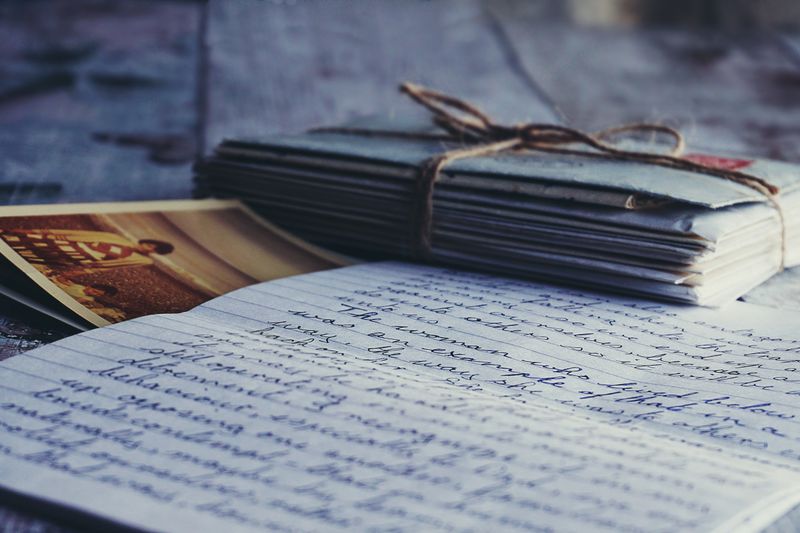
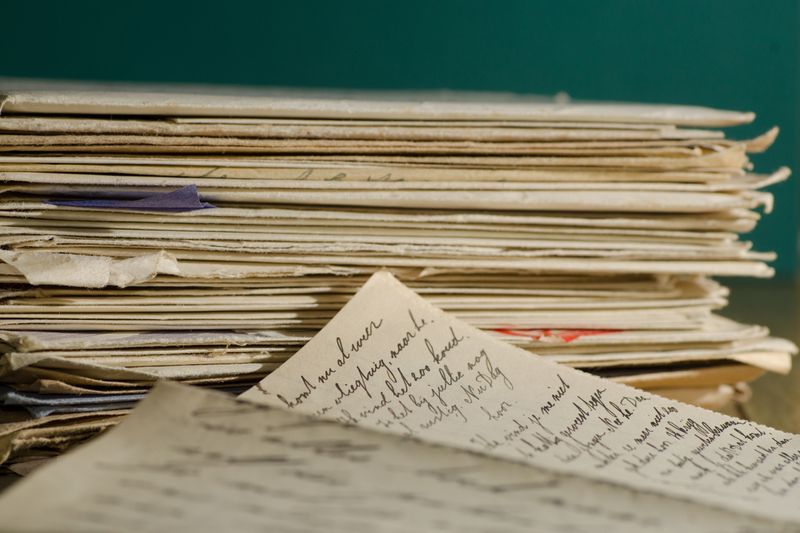
Letters accumulated in boxes and drawers, survived house moves, and were found decades later. Messages live in accounts that are deleted, in devices that fail, and in formats that platforms discontinue. The practical consequence is that the ordinary emotional record of this period is far less likely to survive than that of the 1890s.
A letter was also held by whoever received it, so a correspondence survived if either party kept their half, while a messaging history is a single shared thread that one deletion or one closed account removes for both people at once.
Historians have noticed
Biographies of twentieth-century figures rest heavily on correspondence, and archivists have been explicit that the equivalent material for recent decades is thin. Institutional email is sometimes preserved; personal messaging almost never is. This is a known and largely unsolved problem in archival practice.
Look closer and legal deposit and public records law reach published and official material and stop at the front door, so the category historians lean on hardest is exactly the one no statute obliges anybody to keep.
What survived the transition
Condolence, congratulation and thanks still frequently take written physical form, because the object itself carries meaning. Prison correspondence, long-distance family letters in some communities, and certain professional contexts kept the form alive. Postcards persist almost entirely as objects rather than as messages, which is a complete inversion of their original function.
In hindsight, what those cases share is that the effort is the message: a physical object proves that time was spent on it, and that is precisely the signal a free and instant channel cannot carry however carefully the words are chosen.
Deliberate preservation is possible
Printing a selection, exporting archives periodically, and keeping anything significant in an open format are all straightforward and almost nobody does them. The obstacle is that the material does not feel important while it is current.
That was equally true of letters; the difference is that letters survived neglect and messages do not. Where a platform offers no usable export, screenshots filed in dated folders are an inelegant but genuine archive, and they have the advantage of being readable by anything that can open an image for as long as anybody is likely to care.
The handwriting was doing work nothing replaced
A letter carried evidence of its writer independent of the words: pressure, haste, a crossed-out line, the paper chosen and whether it was the good stationery or whatever was to hand. Disputed documents were tested through that same physical trace, and a typed message offers nothing equivalent about who actually sat down to produce it. The nearest modern substitutes are metadata — timestamp, device, location — which are precise, straightforward to fake and unreadable by the person receiving the message.
In hindsight, a letter was legible as an object to its recipient; a message is legible as an object only to whoever holds the server it passed through.
The takeaway
The writing moved. The archive it used to leave behind did not move with it.
The loss is small and cumulative, which is why it goes unremarked.
Questions readers ask
Are letters really disappearing?
Personal correspondence by post has declined steeply in most countries, while parcel volumes have risen. The letter as a personal genre is the part that has thinned.
How do I preserve digital correspondence?
Export periodically to an open format, keep copies in more than one place, and print anything you would be upset to lose. Platform archives are not a preservation strategy.