Places
The covered market and the roof that made trading possible
A market hall was public infrastructure that happened to contain shops. Removing the roof removes far more than shelter.
This looks at the covered market from the practical end — what holds up once conditions stop being ideal.
What holds up in practice
- A roof lets small traders operate without each building their own premises.
- Low fixed costs made market halls the cheapest route into retail.
- Redevelopment usually replaces many small tenancies with few large ones.
A roof is an economic device
Covering a trading space allows perishable goods, textiles and paper to be sold in weather that would otherwise stop trade entirely. It also lets a trader keep fixtures in place overnight, which removes the daily labour of erecting and dismantling a stall.
Those two effects together turn occasional trading into a continuous business without requiring the trader to acquire a building. That is why market halls were built by municipalities as public works rather than by merchants as private premises. The building was infrastructure in the same sense as a bridge, and the shops inside it were the traffic.
The barrier to entry was deliberately low
A stall could be taken with modest capital, no lease negotiation and no fit-out, which made trading available to people without collateral. That has made markets a consistent route into business for new arrivals to a town or country across a very long period. Many established retail businesses began on a stall, and the progression from stall to shop was a recognised commercial ladder.
By the end, low entry cost also means low exit cost, so an unsuccessful trader leaves without debt and the space refills quickly. Retail parks and shopping centres reverse all of this by requiring long leases, guarantees and substantial fit-out spending.
Density produced the trading conditions
Putting competing traders side by side allows a customer to compare quality and price in a few paces, which sounds bad for sellers. In practice concentration draws the customers in the first place, and traders in the same goods cluster deliberately rather than accidentally. It also produces genuine price discovery for fresh goods, where quality varies daily and no fixed price can be accurate.
Traders adjust through the day and discount heavily before closing, which is a form of pricing that shops with fixed labels cannot use. That flexibility is why markets remain competitive on fresh produce even where they lose comprehensively on packaged goods.
What pressed them
Supermarkets took the packaged goods and the weekly shop, leaving markets dependent on fresh food, textiles and household basics. Car-based shopping favoured sites with parking, and most historic market halls sit in centres where parking is difficult and expensive.
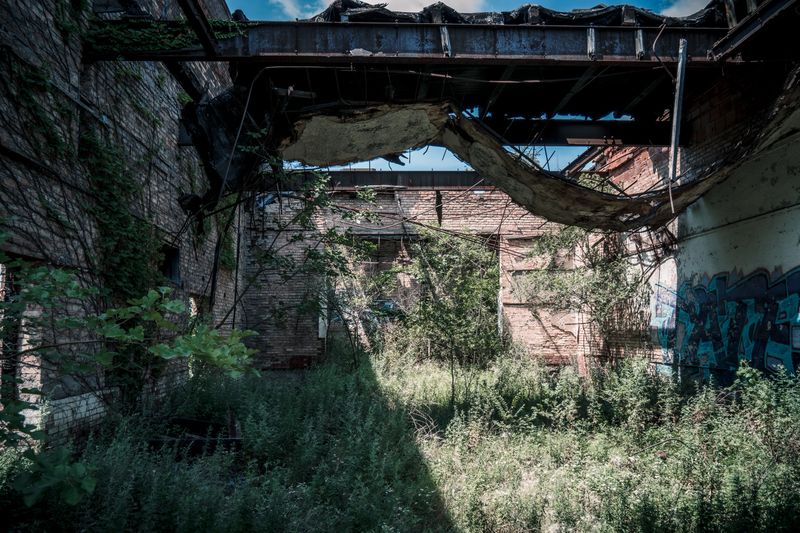
Maintenance of large Victorian and older structures is costly, and deferred repair has been the standard approach in many towns. A market with empty stalls looks failing regardless of the trade in the occupied ones, and that appearance accelerates the decline.
Local authorities frequently own these buildings, so the decision to invest or redevelop is political rather than commercial.
Redevelopment changes who can trade
Refurbishment schemes often succeed at reviving footfall, particularly where food halls and eating replace some of the retail. The consistent effect is higher rents, which changes the tenant mix from many small traders to fewer, better-capitalised ones. That may be the only way to fund the building, and it is not the same thing as preserving what the building did.
Where original traders are offered space at protected rents during transition, continuity is much better maintained. The cheapest retail space in a town centre is a public asset, and it disappears quietly when a scheme is judged a success.
Dates in this period are approximate; the change was gradual and nobody logged it.
What a hall still offers
Fresh produce sold loose remains cheaper and less packaged than the equivalent in most supermarkets, which matters both financially and environmentally. Repairs, alterations, key cutting, watch batteries and other small services cluster in markets because the rent supports low-value work. Those trades have almost nowhere else to go, and their disappearance from a town is usually noticed only when something breaks.
A market also provides a covered public route through a town centre, which is a genuine amenity for anybody walking in bad weather. Buildings that do several unglamorous things at once are consistently undervalued until one of the things stops.
The takeaway
The roof was never for the shoppers. It was what allowed somebody with almost no capital to open in the morning.
Nobody decided to stop. It simply stopped being worth the effort.
Questions readers ask
Why is market produce often cheaper?
Lower fixed costs, less packaging, and pricing that moves through the day to clear perishable stock. Traders can discount heavily before closing in a way that fixed shelf pricing does not allow.
Does refurbishing a market hall save it?
It often restores footfall, but higher rents tend to shift the tenant mix from many small traders towards fewer larger ones. The building can be saved while the low-cost route into trading that it provided is not.