Memory
The Recipe Written In Somebody Else's Hand
Handwritten recipes omit what the writer already knew, so they preserve a household's assumptions rather than instructions, and become harder to follow as those assumptions are lost.

A recipe copied out by hand is a poor set of instructions and an unusually good record of a household. What it leaves out is the part that carries the information.
Handwritten recipes are written for one reader
Somebody recording a method for their own use has no reason to state what they already know. Quantities are approximate, methods are abbreviated, and whole stages are missing.
Oven settings are frequently absent or refer to a specific oven's behaviour rather than a temperature. The instruction assumes the equipment in that particular kitchen.
What survives is therefore a prompt rather than a procedure, useful to the writer and progressively less useful to everybody who comes after.
The omissions record the assumptions
A recipe that does not explain how to rub in fat tells you the writer expected that to be obvious. The gaps map what was common knowledge at the time.
Ingredients named without qualification carry the same information, because they refer to whatever version was ordinarily available in that place.
Reading a family's recipes in sequence therefore shows a change in what needed explaining, which tracks the arrival of new equipment and new products in the kitchen.
Attribution is part of the text
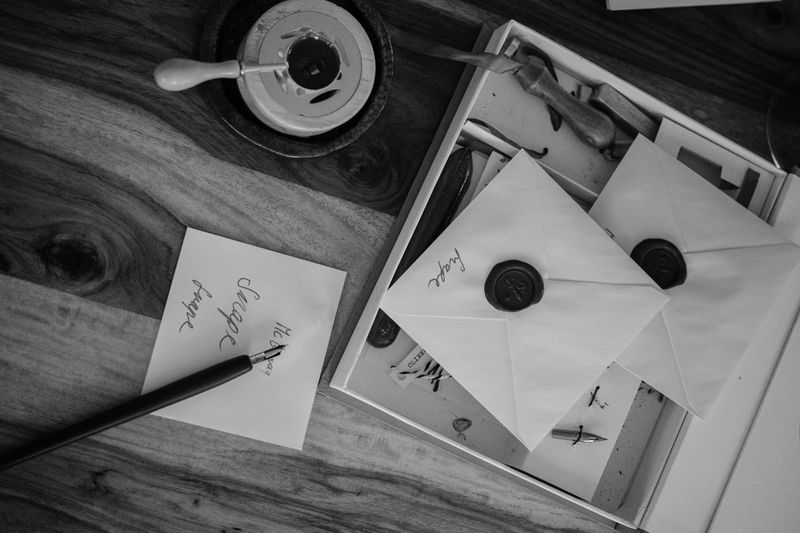
Recipes are frequently titled with a person's name, recording who it came from rather than what it produces. The card is a note about a relationship.
Amendments accumulate on the same card in different inks, showing where somebody disagreed with the original or adjusted it for a different oven.
Damage is evidence too. The cards that are stained and softened are the ones that were used, and the pristine ones record intentions rather than practice.
Why the method resists reconstruction
Attempting an inherited recipe often produces something noticeably different, because the missing information included things nobody thought to record.
Ingredients themselves have changed. Flour, fat, eggs and yeast are not identical to their equivalents decades ago, so the same written quantities give different results.
The remembered version becomes unreachable in a specific way: the instructions survive completely while the conditions they assumed have quietly gone.
What the printed book cannot replace
Published recipes are tested, complete and reproducible, which is precisely why they carry no information about any particular household.
Digital collections solve the durability problem and lose the handwriting, and with it the ability to tell at a glance which relative wrote which card.
What families keep is usually the box rather than the contents. The recipes are rarely cooked, and the object is retained as a record of who used to cook them.
Questions readers ask
How can I date an old family photograph?
Combine physical evidence — paper type, border style, print size, any processor markings — with content clues such as clothing, spectacles, vehicles and signage. Multiple independent indicators are far more reliable than one.
Why do shared digital photos lose their date?
Many platforms strip metadata when images are uploaded or re-saved, and screenshots discard it entirely. The circulating copy frequently carries no reliable date information at all.