Sound & Signal
The Intercom And The Door You Had To Be Let Through
Entryphones replaced the porter with a wire, and their poor audio and one-way visibility created a distinctive social awkwardness that video and app entry have partly resolved.
The door entryphone put a wire where a person used to stand. It solved a security problem cheaply and introduced a small, distinctive social difficulty at every visit.
The system replaced a staffed entrance
Buildings with many residents traditionally controlled access with a porter, who recognised residents, judged visitors and could be held responsible for who came in.
That is an expensive arrangement requiring continuous cover. An electrical system offers a permanent substitute at a fraction of the running cost.
What it cannot replicate is judgement. A lock released remotely admits whoever is standing there, and the resident is relying entirely on a short conversation.
The audio was poor for structural reasons
An entrance panel sits outdoors in traffic noise and weather, with a small speaker and a small microphone, connected by a long run of cable to a handset.
Every part of that chain limits fidelity, and the result is a voice that is recognisable in general but not reliably in particular.
Visitors compensated by announcing themselves in a fixed formula, since names arrive better than sentences do through a compromised channel.
Identification ran one way
The resident could hear the visitor without being seen, while the visitor faced a metal panel with no indication of who, if anybody, was listening.
That asymmetry produced the characteristic behaviour of speaking uncertainly into a grille, unsure whether the door had already been released.
The buzz that follows is an unambiguous instruction with no accompanying explanation, and the visitor has a few seconds to push before it stops.
The lists on the panel became a directory
Naming residents beside their buttons made the panel a public list of who lived in the building, which is convenient for callers and revealing to everybody else.
Many buildings moved to flat numbers alone for that reason, which improves privacy and makes visiting harder for anyone without the number.
Tradespeople developed workarounds, including pressing several buttons at once, and the resulting habit is one reason buildings added video and logged access.
What the video and app versions changed
A camera restores the visual identification the porter provided, and recording adds an audit trail that neither the porter nor the audio panel could offer.
Phone-based entry moves the handset off the wall entirely, so residents can admit visitors while out, which is convenient and quietly weakens the point of a controlled door.
What none of them restore is the person who knew everybody. Access control has become steadily more capable and steadily less able to recognise anyone.
Questions readers ask
Why do some churches still ring the hour?
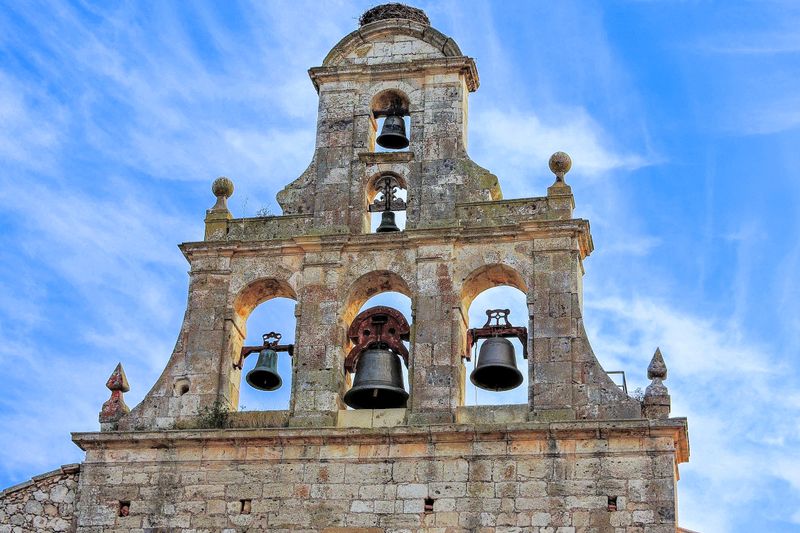
Tradition, liturgical function and in some places legal protection. The timekeeping purpose has gone but the practice is often specifically defended.
Were bells really used to spread news?
Yes. Coded peals conveyed deaths, alarms and public events, and the conventions were widely understood locally, though they varied considerably from place to place.