Rituals
The postcard that arrived after you got home
A message that travelled slower than the sender was a strange and specific form. Instant sharing removed the delay and the whole point of it.
Everything below about the holiday postcard comes from what actually happens rather than from what is supposed to.
What holds up in practice
- The postcard was a short, public, cheap message with a picture attached.
- Slow delivery meant it often arrived after the sender did.
- Instant photo sharing removed the delay, the object and the obligation.
The form was defined by its constraints
A postcard offered a fixed rectangle for a message, no envelope, and postage cheaper than a letter, which set the entire genre. The space forced brevity, and the absence of an envelope meant anybody handling it could read what was written. That combination produced a deliberately trivial register, since nothing private could safely be committed to it.
Weather, food, accommodation and a joke about the sender's luck are not failures of imagination but adaptations to a public medium. Every subsequent short public message format has drifted towards the same tone for exactly the same structural reason.
The picture was doing half the work
The photograph on the front communicated place instantly, which meant the writer did not need to describe where they were. Publishers produced views chosen for recognisability rather than accuracy, and heavy colour correction was standard practice. Those images shaped how places were imagined by people who had never visited, and often for a very long time.
By the end, comic seaside cards were a distinct industry with their own artists, and they attracted censorship in various places. The card was therefore both a personal message and a piece of mass-produced local advertising travelling at the sender's expense.
Arriving late was normal and meaningful
International post took long enough that a card frequently reached its recipient after the sender had already returned. That produced a small dislocation, a message from a person in a place they were no longer in, addressed from a past week. Nobody minded, because the card was never really information; it was evidence that somebody had thought about the recipient while away.
By the end, the delay also meant the sender could not know whether it had arrived, which removed any expectation of reply. A message that cannot be answered is a different social act from one that can, and it asks much less of the recipient.
Sending them was an obligation with a list
Travellers carried a mental or written list of who expected a card, which typically included relatives, neighbours and colleagues. Buying, writing, stamping and posting occupied a genuine portion of a holiday, usually completed in a cafe under mild duress.
For a while, stamps had to be obtained locally, which forced an encounter with a post office in an unfamiliar country. That small errand is one of the few reasons a tourist ever entered ordinary local infrastructure rather than tourist infrastructure.
Removing the obligation removed the errand, and with it a reliable point of contact with the place being visited.
What the replacement does differently
A photograph sent from a phone arrives immediately, shows the actual place rather than a publisher's version, and costs nothing. It also allows a reply, which converts a one-way gesture into a conversation the traveller is now expected to maintain. Posting to many people at once is easier and less personal, since a shared image is addressed to nobody in particular.
For a while, the picture is better and the object has gone, so nothing ends up in a drawer or on a fridge afterwards. What survives from the old form is the tone, which persists in holiday photographs almost unchanged.
The record here is thinner than it should be, and much of it was never written down.
Why cards have not entirely stopped
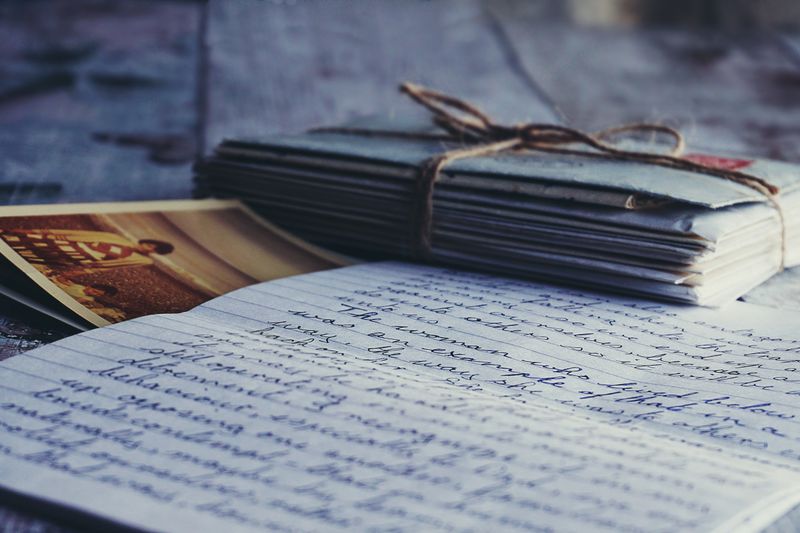
Postcards continue to sell, and the reason given is almost always that the recipient will have something physical to keep. Collectors and local historians value old cards enormously, since they document streets, buildings and businesses that were never otherwise photographed.
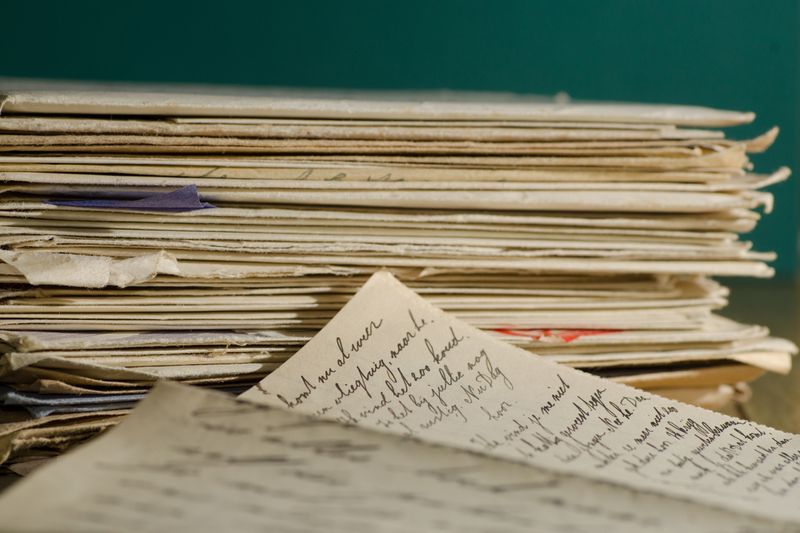
The written side is frequently more valuable than the picture, because dated handwritten notes about ordinary days are scarce. Services that print and post a photograph as a card exist and reinstate the object while removing the errand. That is a reasonable compromise and it cannot restore the one thing that defined the form, which was arriving too late.
The takeaway
It was never news. It was a piece of card saying that somebody stood in a shop, in another country, thinking about you.
Nobody decided to stop. It simply stopped being worth the effort.
Questions readers ask
Why were postcard messages always so trivial?
Because there was no envelope. Anybody handling the card could read it, and the space was tiny. A public, cramped medium produces a light register, which is why weather and food dominate.
Are old postcards worth anything?
Some are, particularly ones showing streets, shops and buildings that were never otherwise photographed. Local historians often value the written and postmarked side as much as the picture.