Places
The Single Screen Cinema And One Film A Week
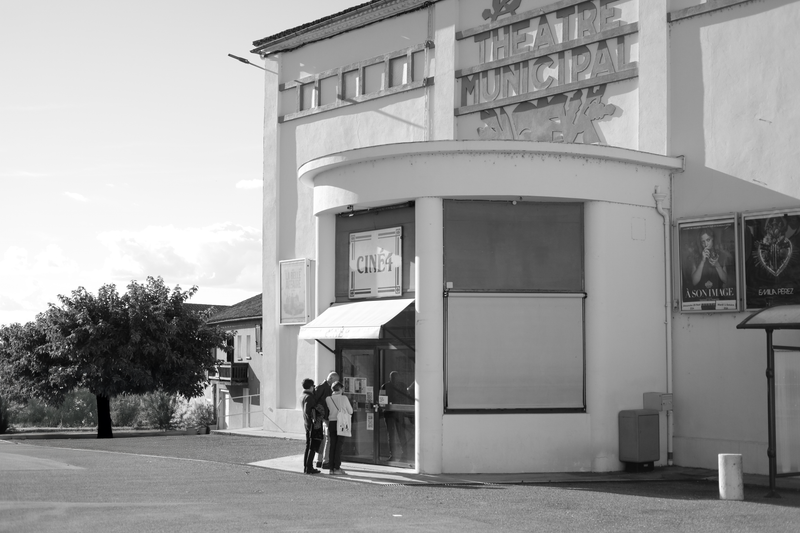
A town with one screen showed one film at a time, which made cinema-going a shared civic event and gave a bad booking consequences the multiplex removed.

A town with a single screen showed a single film, and everybody who went to the pictures that week saw the same one. That constraint shaped both the audience and the business.
One screen means one decision
Programming a single auditorium is a sequence of bets. The manager chose what would run and for how long, and a poor choice emptied the building for the whole of its run.
Because a film had to satisfy the entire local audience, the middle of the range was favoured. Anything narrow struggled to justify occupying the only screen in the district.
Runs were extended or cut according to how the first evenings went. The schedule was responsive in a way a fixed multi-screen grid is not, because there was only one variable.
The shared film produced a shared conversation
If the town saw one film a week, everybody discussing the pictures was discussing the same thing. That is a different social object from a personal viewing choice made from a large menu.
Anticipation was collective too. A film that had been advertised for a fortnight arrived as an event with a date attached rather than as something available whenever convenient.
Missing it had consequences. A film that left after a week and might not return for years was a genuinely lost opportunity, which is why full houses were achievable at all.
The building was designed for a single audience
Large auditoria with balconies exist because the whole town was expected to arrive across a handful of showings. Capacity had to match the peak, not the average.
Those volumes are expensive to heat, staff and maintain, and they only work when they are close to full. A half-empty large room loses more money than a full small one earns.
Subdividing solved the arithmetic. Splitting one hall into several smaller ones let a site run four films to modest audiences instead of one film to an audience that had become unreliable.
Why television changed the sums
Once households could watch at home, the marginal trip to the cinema had to be justified against an alternative that cost nothing extra. Attendance fell steeply and never returned to its earlier level.
Smaller and more frequent audiences suited more screens with fewer seats. The multiplex is a direct response to the audience fragmenting rather than simply to a preference for choice.
Choice then became the selling point, and with it went the shared object. Four screens serve four audiences who no longer have a film in common when they leave.
What the surviving single screens do differently
Independent cinemas with one auditorium still exist, and most of them have become curators. Their programming is the product, precisely because they cannot compete on breadth.
That works by rebuilding the shared event deliberately: a limited run, a specific evening, an audience assembled around one showing rather than around a building's convenience.
It is the old model restored on purpose, and it depends on scarcity being manufactured rather than imposed by the number of projectors a town could afford.
Questions readers ask
Can you still get film developed?
Yes, through specialist labs and some mail-in services, and availability has improved slightly with renewed interest in film. Prices are considerably higher than in the mass-market era.
Why did photo shops disappear so quickly?
Digital cameras removed both the film and the processing step at once. When the product is a delay you have eliminated, there is nothing left to sell.