Objects
The Coin Jar And Money You Could See Accumulating
Loose change collected in a jar turned small unnoticed amounts into a visible pile, and the physical accumulation did something a bank balance does not.

Nearly every household kept a container for coins, and its contents grew without anyone deciding to save. The pile was a byproduct of cash transactions rather than an act of discipline.
Change was a mechanical inevitability
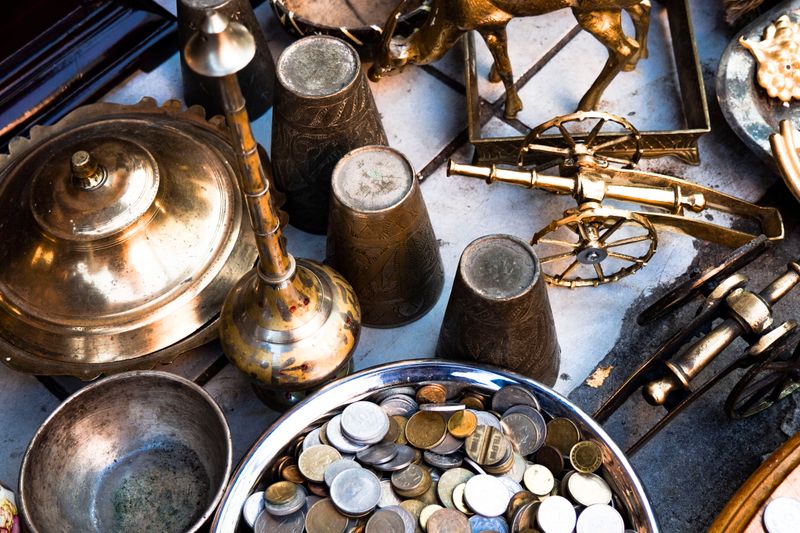
Paying cash for something priced at a few dollars and change produced coins, every time. Nobody wanted them in a pocket, so they collected somewhere once the pockets were emptied.
The jar existed to absorb that. It was less a savings vehicle than a solution to the problem of what to do with objects too small to spend easily.
Because it required no intention, it kept working. A saving method that depends on remembering to save fails often, while one that depends on emptying your pockets rarely does.
Visibility did the persuading
The jar was transparent or open, and the level rose. That gave saving a physical dimension, where progress could be observed without checking anything.
A rising line in a container reads as accumulation in a way a number does not. The eye registers volume immediately, and the effect required no interpretation.
It also made spending it feel like a decision. Taking money out of the jar reversed something visible, which is a mild friction a balance transfer does not create.
Counting was the ritual at the end
Emptying the jar was an event. Coins were sorted, rolled into paper wrappers, and counted at a kitchen table, often with more than one person involved.
The work was slow enough that the total arrived gradually. You watched the amount assemble rather than being told it, which changed how large it seemed.
Households frequently attached the money to a purpose in advance. It became the vacation fund or the fund for a specific thing, and naming it gave the pile a direction.
Cash volume fell and the jar stopped filling
As card and phone payments became the default, transactions stopped producing change. The jar did not get abandoned so much as it stopped being fed.
The saving that replaced it works better on paper. Automatic transfers and round-up features move more money more reliably than a jar ever did.
But they are invisible by design. The money moves without being observed, which is why people who use them often cannot say how much has accumulated.
What the pile actually taught
The jar demonstrated that small amounts add up, and it demonstrated it physically rather than as an argument. That is a different kind of knowledge.
Children absorbed this without instruction. A child who helped count a jar had a concrete sense of scale that a discussion of compound interest does not produce.
That lesson now has to be taught deliberately, because nothing in ordinary life demonstrates it anymore. The jar did it for free, simply by sitting on a dresser.
Questions readers ask
Is carbon paper still made?
Yes, in small quantities for specialist uses including some artistic and tracing applications, though carbonless multi-part sets replaced it for business forms.
Why does email still say cc?
The term was carried over directly from office correspondence, where the carbon copy was a second sheet typed at the same time as the original letter.