Memory
Names written inside books and the ownership that left a trace
Books used to carry evidence of who had held them. That evidence made objects traceable in a way that files and licences are not.

Treat the sections below as a sequence. With inscriptions in books, getting the early decisions right makes the later ones much easier.
Before you start
- Inscriptions, plates and stamps recorded a chain of custody without any system.
- Provenance changes both the historical value and the meaning of a copy.
- Digital ownership is a licence that leaves no trace and cannot be given away.
Books recorded their own history
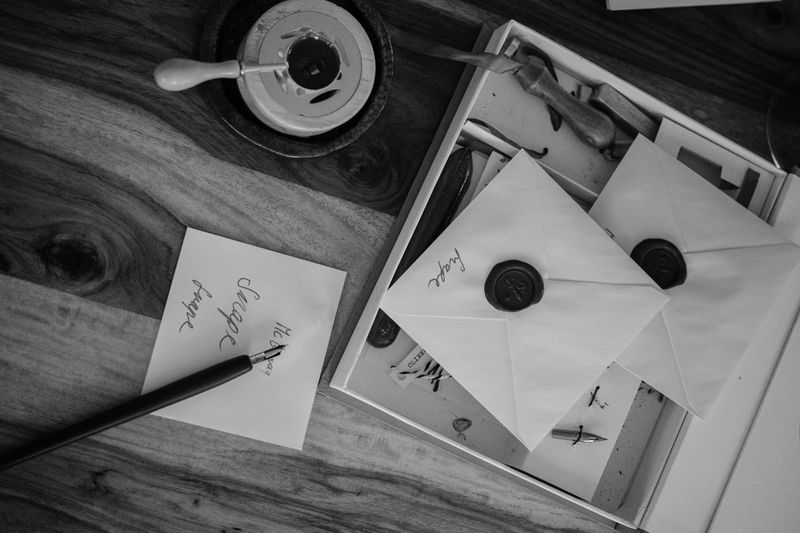
An owner writing a name and a date inside a cover created a permanent record attached to the object itself. Bookplates, school prize labels, library stamps and gift inscriptions all did the same thing with varying formality. Because the record travelled with the book, a copy passing through many hands accumulated a legible chain of custody.
No system was required, no register existed, and the information survived precisely because it was physically part of the thing. Very few modern possessions carry any equivalent, and almost nothing digital does.
Provenance changes what a copy is
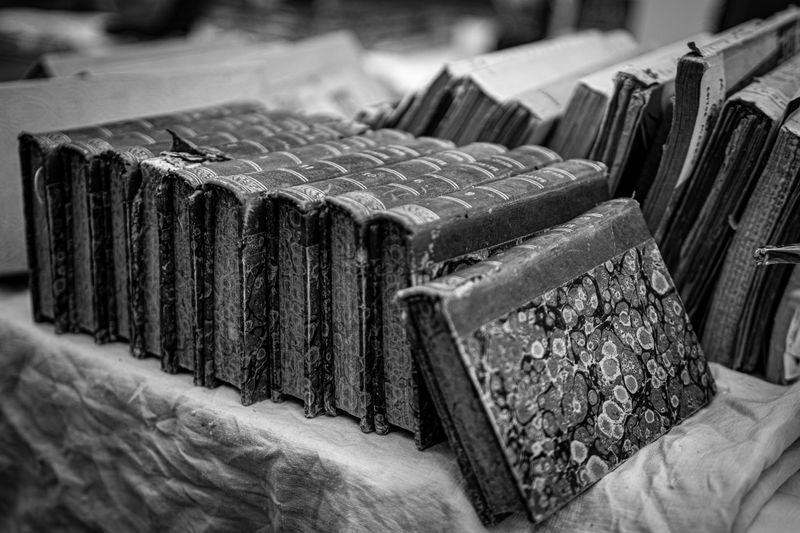
Two identical printings can differ enormously in value and interest depending on who owned and annotated them. A copy inscribed by an author, or marked by a notable reader, becomes a distinct object rather than another instance of a text.
Institutions collect specific copies for this reason, and the marks are catalogued as carefully as the text. For ordinary books the same principle operates at a domestic scale, since a grandparent's name changes how a copy is regarded. The text is reproducible and the copy is not, which is the entire basis of the distinction.
The marks were also social documents
Prize labels record schools, subjects and years, and they are frequently the only surviving evidence of an institution's existence. Gift inscriptions date relationships, name people and occasionally record events that appear in no other document.
In hindsight, library stamps trace institutional histories through mergers, closures and disposals that were otherwise unrecorded. Second-hand dealers and local historians use these marks routinely, and they are a genuine research resource. None of it was created deliberately as a record, which is generally true of the most useful evidence.
Writing in books divides people sharply
Marginalia were normal for centuries and are treated as damage in most contemporary contexts outside academic study. Annotations by an interesting reader are prized, and identical annotations by an unknown reader reduce a book's resale value. That inconsistency is entirely about identifiability rather than about the marks themselves.
In hindsight, conservators generally advise against adding to older or valuable books, and specific guidance depends on the item.
For an ordinary reading copy, writing a name inside the cover costs nothing and may matter to somebody later.
What the replacement does differently
Digital books are licensed rather than owned in most cases, and the terms usually prevent transfer, lending or resale. That is a real change in the nature of possession and it is stated in terms almost nobody reads before purchasing.
Highlights and notes are stored in an account rather than in the object, so they vanish when the account does. A licensed library cannot be inherited, given away or found in a house clearance, which removes it from the record entirely. Rules on digital inheritance and account transfer differ by country and provider, and they are unsettled almost everywhere.
Memory is a poor archive, and it is most of what survives.
What is worth doing about it
Writing a name and a year inside books that matter takes seconds and creates a record that will outlive any device. Noting who gave a book and why converts an ordinary object into something a later reader can actually interpret.
For anything digital, exporting highlights and notes to plain files removes the dependency on an account continuing to exist. Neither habit is common, and both are the sort of thing people wish had been done when they inherit a collection. The trace was always accidental, and it can now only be deliberate.
The takeaway
A name inside a cover is the cheapest archive anybody ever built, and it is the one thing a licence cannot reproduce.
The loss is small and cumulative, which is why it goes unremarked.
Questions readers ask
Does writing in a book reduce its value?
Usually, unless the annotator is identifiable and interesting. The inconsistency is entirely about who made the marks. For an ordinary reading copy, a name and date inside the cover costs nothing and may matter later.
Can I leave my digital books to somebody?
Generally not. Most digital books are licensed rather than owned, and the terms typically prevent transfer or resale. Rules on digital inheritance vary by country and provider and remain unsettled almost everywhere.